
A guest doesn't visit your website because they're looking for a room with four walls and a bed. They're looking for a memorable stay.
Before they experience your hospitality in person, they experience it online. That's why your website is more than a booking platform.
So, what should every hotel website include to truly connect with guests? Let's explore.
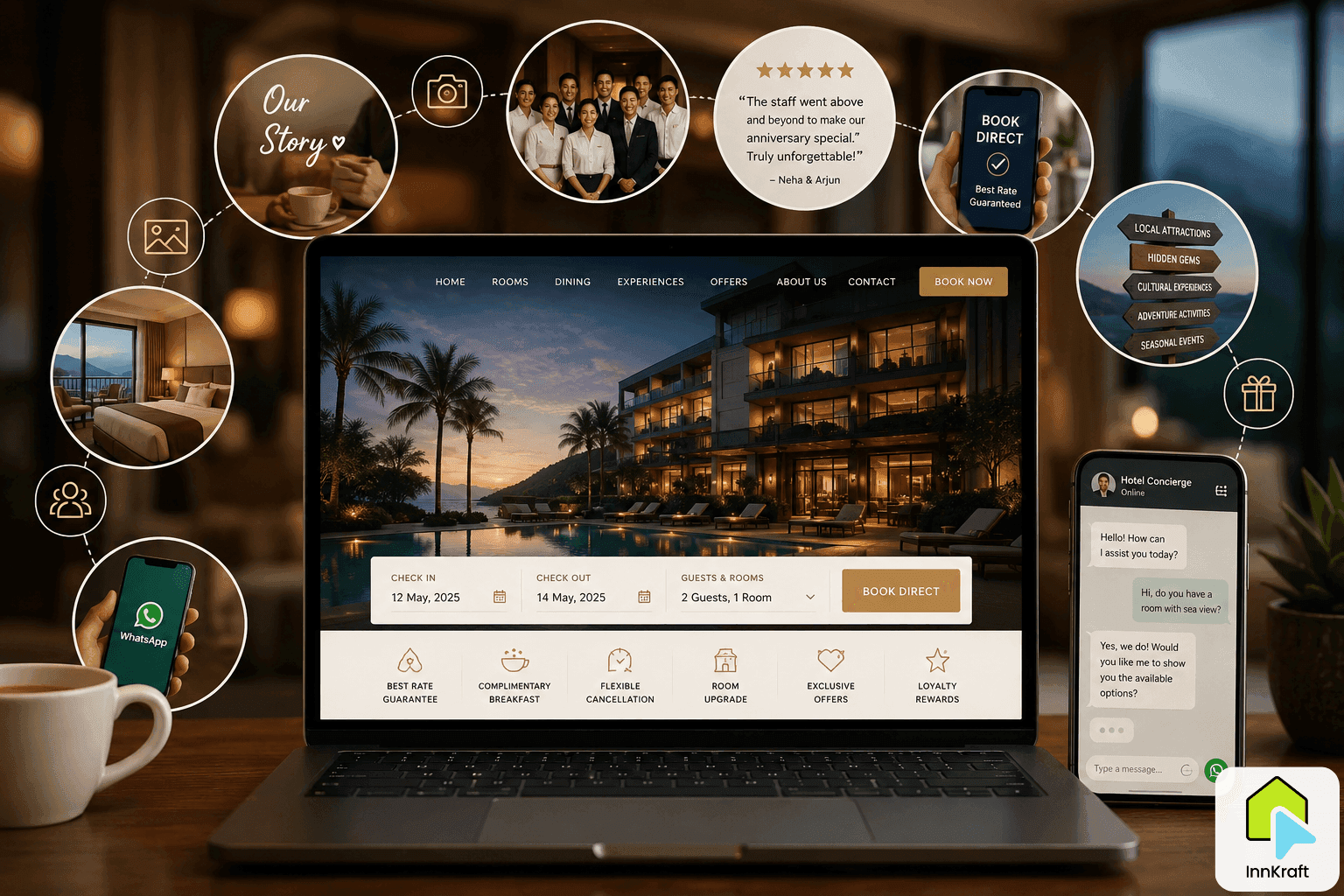
1. A Clear Brand Story: Tell Your Story, Not Just Your Room Types
Your hotel's story is often the first emotional connection a guest makes with your brand.
While rooms and amenities can be compared across dozens of hotels, your story is unique and cannot be replicated. Sharing why your hotel was created, the values you stand for and the experience you aim to deliver helps guests connect on a deeper level.
Whether it's a family-run legacy, a commitment to local culture or a passion for personalized hospitality, your story builds trust and differentiates your property.
Keep it authentic, concise and visible on your homepage or About Us section. Use real photographs, founder insights or guest-inspired moments to make it relatable.
A compelling story helps guests remember your hotel long after they've left your website and often gives them a reason to choose you over competitors.
2. Authentic Photography
Guests want to see what their stay will actually look and feel like.
While professionally shot images are important, overly edited or unrealistic photos can create expectations that are difficult to meet. Authentic photography builds trust by giving guests a genuine view of your property.
Show more than just rooms. Highlight your public spaces, dining experiences, local surroundings, staff interactions and real guest moments. Let visitors see the atmosphere, not just the facilities.
A great photo doesn't simply showcase a room. It helps guests picture themselves enjoying their morning coffee on the balcony, celebrating a special occasion or relaxing after a long day.
When guests can imagine their experience, they're one step closer to making a booking.
3. A Warm Welcome Message
Think of your homepage as your hotel's front entrance.
When guests arrive on your website, what is the first thing they see? More importantly, how does it make them feel?
A warm welcome message immediately sets the tone for the guest experience and helps visitors understand who you are, what you offer and what makes your property special. It's your opportunity to make a memorable first impression before guests explore your rooms or amenities.
Keep the message simple, genuine and aligned with your brand personality. Whether you're a luxury resort, a boutique retreat or a business hotel, your welcome message should make guests feel like they're already being welcomed through your doors.
The best hotel websites don't just provide information. They make visitors feel at home within seconds.
4. The People Behind the Hospitality
A beautiful property may attract guests, but it's the people who create memorable experiences.
Think about the reviews guests leave after a great stay. They often mention the warm welcome at reception, the attentive housekeeping staff or the team member who went the extra mile to make their visit special.
Introducing your team, leadership and service philosophy on your website helps guests see the human side of your hotel. It builds trust, adds authenticity and gives visitors a glimpse of the hospitality they can expect during their stay.
Whether it's a short message from the management team, staff spotlights or stories about your service culture, showcasing the people behind your property helps turn a hotel into a place guests feel connected to before they even arrive.
5. Guest Reviews That Tell Stories
A five-star rating can catch a guest's attention, but a genuine guest story creates a much stronger connection.
Instead of only showcasing review scores, highlight the experiences behind them. What made a guest's stay memorable? Was it the personalized service, a special celebration, a breathtaking view or a thoughtful gesture from your team?
These stories bring your hospitality to life and help potential guests imagine what their own experience could be like. They also build credibility because travelers often trust the experiences of other guests more than marketing messages.
When visitors can see real memories, emotions and experiences shared by past guests, they're more likely to feel confident about choosing your hotel.
6. Direct Booking Benefits
If guests are already visiting your website, you've done the hard part: getting their attention.
Now give them a compelling reason to book directly with you instead of returning to an OTA. Guests should immediately see the value of booking through your website, whether it's a best rate guarantee, complimentary breakfast, flexible cancellation, room upgrades, exclusive packages or loyalty rewards.
Many hotels make the mistake of hiding these benefits deep within the booking process. Instead, showcase them prominently on your homepage, room pages and booking screens.
When guests clearly understand what's in it for them, they're far more likely to complete their reservation directly with your hotel.
Book a Free Demo
Want a website that makes guests feel something before they arrive? Get a free website health check tailored for your property from InnKraft.
7. Simple and Easy Navigation
Imagine walking into a hotel and not knowing where the reception desk is. That's exactly how guests feel when a website is difficult to navigate.
Visitors come to your website with specific goals: finding room information, exploring amenities, checking dining options or making a reservation. If they have to click through multiple pages or search endlessly for basic details, frustration quickly sets in.
A well-structured website should make information easy to find and booking easy to complete. Clear menus, intuitive page layouts and visible booking options help guests move smoothly through their journey.
The less effort guests have to make, the more likely they are to stay engaged and ultimately make a booking.
8. Instant Ways to Connect
A guest interested in your hotel is often just one question away from making a booking.
Whether they're asking about room availability, airport transfers, check-in timings or special requests, they expect quick and convenient ways to reach you. If getting in touch feels difficult, many guests will simply move on to another option.
That's why your website should make communication effortless. Provide easy access to WhatsApp, phone numbers, email, live chat and inquiry forms so guests can connect through the channel they're most comfortable using.
The faster you can answer questions and remove uncertainty, the easier it becomes to turn interest into a confirmed reservation.
9. Local Experiences and Destination Content
Guests may be booking a room, but what they're really planning is a trip.
They want to know what they can see, do and experience during their stay. By showcasing local attractions, hidden gems, cultural experiences, nearby activities and seasonal events, you help guests visualize the complete journey, not just the accommodation.
Destination content also positions your hotel as a trusted local guide rather than simply a place to stay. Whether it's a popular tourist attraction, a lesser-known café, a cultural festival or a scenic viewpoint, these recommendations add value and inspire travel decisions.
The easier it is for guests to picture their experience at your destination, the more confident they'll feel about booking your hotel.
10. A Mobile-First Experience
Today's travelers are more likely to discover your hotel on a smartphone than on a desktop computer.
Whether they're researching destinations, comparing properties or making last-minute reservations, guests expect a smooth mobile experience. If your website is slow to load, difficult to navigate or challenging to book through on a phone, potential guests may leave before completing their reservation.
Take a moment to view your website from a guest's perspective. Can they easily browse rooms, find important information and complete a booking with just a few taps?
A mobile-friendly website is no longer a luxury, it's a necessity. Because even the most beautiful website can lose bookings if it doesn't perform well on the device guests use most.
11. A Frictionless Booking Journey
Getting a guest to your booking page is a significant achievement, but the journey isn't over yet.
Many hotels lose potential bookings at the final stage because the booking process becomes complicated. Lengthy forms, too many steps, slow-loading pages, unexpected charges or confusing room selections can cause guests to abandon their reservation altogether.
Your booking experience should be simple, transparent and easy to complete. Every additional click or obstacle creates an opportunity for guests to reconsider or leave.
The smoother the booking journey, the more likely guests are to complete their reservation. When booking feels effortless, conversions naturally increase.
12. Personalized Guest Engagement
Not every website visitor is ready to book the moment they arrive.
Some guests have questions about room options. Others need reassurance about policies, amenities or special requests. Many are simply looking for guidance before making a decision.
This is where personalized guest engagement becomes invaluable. By offering real-time assistance through chat, WhatsApp or AI-powered support, hotels can engage visitors when their interest is at its highest. Instead of leaving with unanswered questions, guests receive the information they need to move forward with confidence.
A timely conversation can often be the difference between a visitor who leaves your website and a guest who completes a booking. The more personalized and accessible the experience, the more likely guests are to choose your hotel.
Finally, Here's the Bigger Picture
A great hotel website does more than showcase rooms and rates.
It reflects your brand. It communicates your values. It highlights your people. It tells your story.
And most importantly, it creates an emotional connection before a guest ever walks through your doors.
The hotels winning more direct bookings today aren't necessarily the ones with the fanciest websites. They're the ones that make guests feel something.
Because when guests connect with your hotel, they're far more likely to book with confidence.
Is Your Website Doing Enough?
Take a moment and look at your website through the eyes of a first-time visitor.
Does it simply provide information? Or does it create an experience?
Book a Free Demo
Book a demo with InnKraft and discover how modern guest engagement tools can help your hotel create stronger connections, increase direct bookings and turn website visitors into loyal guests.
